 Episode 120
· 01:02:37
Ron Rapatalo: What's up? I'm Ron Rapatalo, and this is the Ronderings podcast. Around here, I sit down with guests for real, unpolished conversations about the lessons and values that shape them. And I'll be right there with you, sharing my own take, laughing at myself when I need to, and wondering out loud about this messy thing called life.
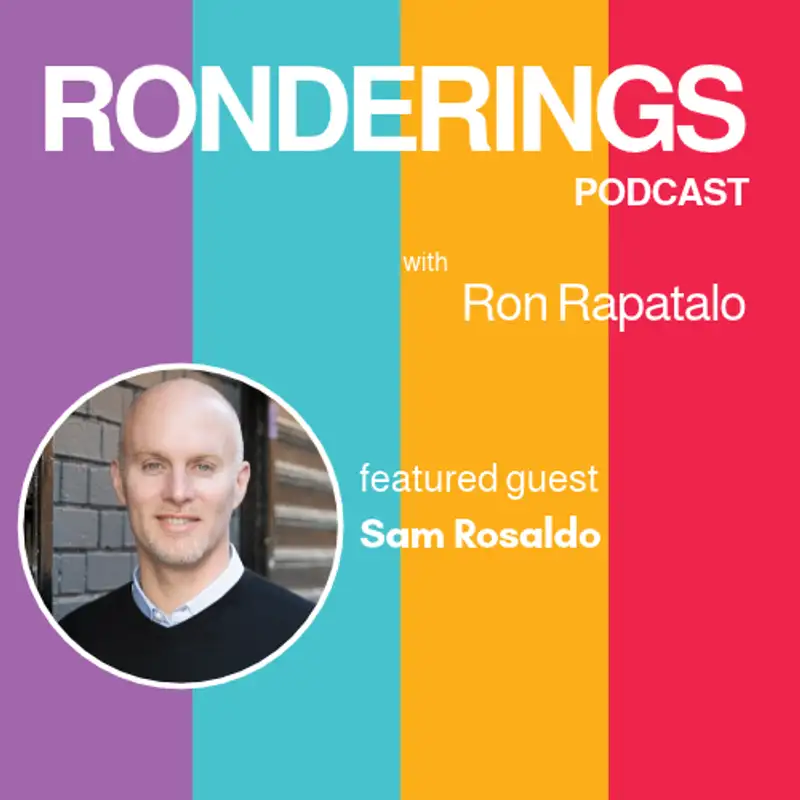
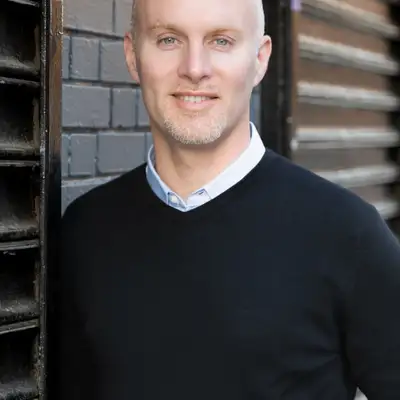
Ron Rapatalo: Glad you pulled up a chair. Let's get into it. Welcome back to Ronderings. Today I'm talking with Sam Rosaldo. Sam and I found out pretty quickly that we have a lot in common. Education, coaching, New York City, baseball, being married to black women. Probably more Rondering than either of them.
Ron Rapatalo: But Sam's story is unlike anyone I've had on the podcast. His mother died when he was five years old, five years old while doing anthropological field work in the Philippines. His father, the anthropologist Renato Rosaldo, wrote deeply about grief and what it means to put yourself inside the story rather than pretending you're somehow outside of it.
Ron Rapatalo: Sam lost his father earlier this year after a long period of decline. A conversation about grief, healing, and what he learned from his father is one of the most moving parts of our convo. But Sam is also what he calls a radical bureaucrat. He spent more than two decades working inside the New York City education system, trying to push institutions toward greater equity without losing himself in the process.
Ron Rapatalo: He talked about rocking a boat without falling out, about values as a compass, about the tension between what an institution asks of you or you believe is right, and about how you keep doing the work without burning yourself out. This is my convo with Sam Rosaldo. Ronderings fam. I have a f fellow member of the Ronderings family that I know through my New York City public schools world.
Ron Rapatalo: Sam Rosaldo is here on the mic, and I want to shout out Sam and some other people that we know in common. Including the brilliant and you know I'm gonna name Sam Michael motherfucking Ryan. People call Michael Ryan because he's got one of those names. First of all, both first names. Right?
Ron Rapatalo: Ryan, Michael Ryan. And I don't know anybody. That doesn't call him by Michael Ryan because he has just that name. It's one of those names where, like, you never say, I never hear people call Mike. Or Michael's like, hey, did you talk to Michael Ryan?
Sam Rosaldo: Yeah, so totally. I love Michael Ryan. I love that you brought that in. Shout out to Michael Ryan.
Ron Rapatalo: He's one of my favorite people. You know, it's funny, like, you know, it's always the quiet. Ones who are the loudest. Let me just say that about him. Having gone to the Super Bowl with him, we drove 14 hours to Indianapolis for yes, that's a another store for another time. Yeah. We got Super Bowl tickets through his si his sister's friend 'cause they couldn't go to the Super Bowl because um the wife just had a C-section like two weeks before the Super Bowl.
Ron Rapatalo: So they were giant season ticket holders. They won the lottery to get the tickets, but they couldn't go. And so we were very, very fortunate and lucky to get the tickets at face value. Face Value Super Bowl tickets are still not cheap, let's be clear. Back then. This 2009 man. It's 2013. It's 2013.
Sam Rosaldo: Okay. 2013. Yep. Wow. Yeah. That's great. That must have been a blast.
Ron Rapatalo: It was a lot of fun. And so, you know, Michael Ryan tears it up. That's all I gotta say. You know, when you watch in sports with him, he and I've been to a number of Yankees game with him. Shout out to my Yankees. I got my Lawrence Taylor t-shirt on.
Sam Rosaldo: I've done it. I've been to a Yankees game with him as well. Yeah.
Ron Rapatalo: He's like, come on up. I'm like, Michael, why are you shouting? Oh my God.
Sam Rosaldo: Everyone should know that this is Michael is a data head. So he talked about the quiet type, right?
Ron Rapatalo: It all totally tracks his. His li his book collection is think one of the stronger book collections I've ever seen. I live, Michael Ryan was my roommate in Jersey City when I lived in Jersey City first. Oh, wow. So yeah. This makes me think um I do you think Michael Ryan would want to be on the pod?
Sam Rosaldo: What do you think? Yeah. Yeah. I mean, for you, yeah.
Ron Rapatalo: Yeah, for me. He was like, I don't Ron. I don't work hard thoughts. I mean, I don't, I don't do the best impression. I think I can do my garage impression. Uh oh my god, Sam. So let's go right into it, brother. You ready?
Sam Rosaldo: I'm ready.
Ron Rapatalo: What's your story?
Sam Rosaldo: Hey, I first have to say thank you for having me on. Um absolutely. Yeah. As I mentioned just a minute ago, I've I've I've listened to probably at least ten of your episodes and uh people athletes say this: like to be mentioned in the same sentence as, right? Like, yeah, to be on the same podcast as.
Sam Rosaldo: Um the the people that you've had on um it's really an honor, and uh, thank you, thank you. And I've been looking forward to this in particular because you're damn good at what you do. Thank you. And so you're a good interviewer and a good listener. And so I'm like, all right, I'm ready to tell my story.
Sam Rosaldo: Um so here we go. And I now know I know a lot more about you than you know about me. And so I'm also just excited to show you. Some of the things that we have in common that you probably don't know.
Ron Rapatalo: Look at that. This is why I love this format because I'm going to find out an incredible amount about you. And we're going to see where there are even more synergies they already have.
Sam Rosaldo: Yeah, and so exactly. So obviously, the story can be told in so many ways, but I'm going to start my story with a tragedy. Um tragedy that has really shaped me in so many ways, some that I'm aware of and some that I'm still learning about, but also tragedy that has.
Sam Rosaldo: Like so many tragedies kind of turned into something really beautiful. Um and that is the in uh when I was five years old in 1981. My mother died. Uh and my parents uh were anthropologists in the Philippines so this is now let's see yep.
Ron Rapatalo: Right off the bat, Steve. Wow. Yeah. Okay.
Sam Rosaldo: Number number one similarity or connection, I should say.
Ron Rapatalo: Oh shit, wow.
Sam Rosaldo: So they had done their field research. They did two years of field research. Um with the what they call the Ilongots, or also widely known as the Bugkalot tribe in northern Luzon. In the late 1960s, and they returned for a year in the early 70s with it, and that tribe had been known as a headhunting tribe.
Sam Rosaldo: And so they were in large part making sense of what that even meant. Um and we went back in 1981 and we visited those people who were like their family by this point, having spent three years with them. Um we spent time in Manila and I went to school in Baguio City and we were intending to spend two years there and this is all within two months.
Sam Rosaldo: Um and uh um and then their project was going to be with another group. Called the Ifugao. And so we yeah. And um my mother went out to with some of the people from the village to survey the land.
Sam Rosaldo: And she be fell from a cliff. She tripped and fell. And so fell about 60 feet and died instantly. And so I was five, my brother was one. Yeah. And we went, my dad and I, and my brother, you know, we. Made our way home as quickly as possible.
Sam Rosaldo: Um and so the tragedy is you know obvious um my my dad the next year. Like very intentionally grieving. And during that time he wrote would become his most famous anthropological text was called um Grief and a Headhunter's Rage.
Sam Rosaldo: Um and it became a contribution to the field because what he was writing about was um he had he had been told by the Ilongot there. Headhunting had been a way an expression of grief. You know, if someone were to lose a child, they may go out and go on a headhunting raid.
Sam Rosaldo: As an expression of their rage and a release. And um he felt like he never understood what that meant until he experienced the loss of his wife. Um and it was a text about not distancing yourself from the people that you're studying but being humble enough to put yourself in the picture.
Sam Rosaldo: I'm not an anthropologist, so I hope I'm doing it justice, but I think you get the idea. And he and a lot of what he taught my brother and myself and later um very not long afterwards, you know, within a couple of years, he remarried and my um stepmother.
Sam Rosaldo: Formally adopted my brother and I um I refer to her as my mom as well. So um I have a a half sister through her who's my s my sister. And a lot of what he taught us was how to grieve. And it's what that text was about. And he was kind of intentional throughout his life.
Sam Rosaldo: About um really? Any form of healing that he could find. Uh therapy was huge for him. Uh but later after his first stroke in the late nineties, he became a poet. And a lot of his poetry was about excavating all of the things that had happened to him.
Ron Rapatalo: Can you share your dad's name for the audience, Sam?
Sam Rosaldo: Renato Rosaldo.
Ron Rapatalo: Renato Rosaldo, okay. Yeah. Thank you.
Sam Rosaldo: And um when I refer to the beauty that came out of it, my family is very close. And it's a closest is born of a very intentional effort. Uh were were purposeful about being close and about communicating. About speaking about our feelings.
Sam Rosaldo: And my dad over the last 10 years, he started to decline. He had cerebrovascular disease, and so cognitively he was declining, and physically, he was declining. Um and last in in May he died. Um and his death in his last year of his life.
Sam Rosaldo: Word I am just like still just overcome by gratitude. Um it was I mean, whatever the opposite of a tragedy is, if like a blessing, if a death could be a blessing. Um I feel that way about it. Because his final year, we moved him to an apartment near us in Harlem.
Sam Rosaldo: Um and my mom would visit, but that way I could really manage his care. It wasn't something we came to lightly, but it. Um he had really good care. Uh he was very happy after having been in some difficult care situations. Uh and um my brother and sister got closer through the process.
Sam Rosaldo: My brother and sister and I, the three of us. Um and I was just, I felt so fortunate. They live, my brother and sister live in California. I live here in New York. And I was fortunate to be the one. To be caring the most, to be in charge and to have all this time with him. Um and it felt like there's no way that so much of the beauty would have that came from that time would have happened if it had not kind of if we hadn't gone through the tragedy first.
Sam Rosaldo: And so there was a synergy, like a circularness to it. And the last thing I'll say about it is that the process that my dad taught me so much about grieving, and that I've been able to apply it to his own death. Is kind of mind-boggling. Um and he actually other thing that I'll mention is he he wrote, he published.
Sam Rosaldo: Five books of poetry and one of them was called The Day of Shelly's Death. My mom, Michelle Zimbalist Rosaldo. Um and it's an amazing, amazing book. It combines ethnography and poetry. Uh and so again, he wrote that just about 15 years ago and and it just kind of bubbled out of him.
Sam Rosaldo: Like he couldn't he couldn't stop. Uh at the time. And again, it was this continued teaching and this continued modeling of excavating your pain and exploring it as an artist. And and almost in a spiritual sense. Um so, I haven't even spoken about my career yet in my story, but I think the things that are most present to me at the moment and where I really wanted to start my story and hopefully.
Sam Rosaldo: Share a little bit about who I am through that.
Ron Rapatalo: So I'm curious, Sam, um you probably have heard me talk about the death of my father on my podcast and my writings, right? And I'm curious, you know, you were five when your mom passed. How would you align or think about or compare. How you dealt with the grief.
Ron Rapatalo: Of your mom's death when you were five. So now your dad's passing. You know, in May. Like, so I'm curious for you to like kind of juxtapose it. Your dad was there along the way, right, that whole time. But here is like same story around handling the grief. From those two vantage points.
Sam Rosaldo: Night and day. I mean number one, just at five, not equipped to make sense of what was happening. And so, as a five-year-old, I never remembered crying. Or or even consciously, and this is strange enough, like, I don't even remember consciously having the thought, like, I miss my mother.
Sam Rosaldo: Um I had a rage. And so when my dad began seeing uh my second mother when they started dating and and we were going to trips and things that like I would take out my rage on her. And rage was a big expression of my grief at that time. Uh so it wasn't until my uncle, I had been to visit her grave several times, and he took me and my brother and cousins when I was about probably nine years old.
Sam Rosaldo: Um to the grave site and I remember tears just like ex coming out. And that was the first time I remember explicitly crying about it. Uh three, four, five years later, something. With my dad's death this time. It was like I was grieving consciously. For years, as he was declining.
Sam Rosaldo: And and aware of what I was doing. And filled with gratitude to feel so much. To have access to those feelings and to know that the feelings were an expression of love. And then I was surprised. Because when he died, you know, when he he finally left his body.
Sam Rosaldo: He uh CAD had a stroke six weeks before where he couldn't speak or talk very much those last six weeks. And then in the three days before he really exited. He was unconscious. I and and so when he left his body, I didn't think it was going to hit me any harder than it already had.
Sam Rosaldo: And it did. Um for that first week. But again, I was prepared for it. You know, people talk. I knew, okay, there are waves of grief that are going to hit. And when they hit, I was like you know. Okay, let me let me find space to cry. Let me let me go in my car and scream.
Sam Rosaldo: Like, let me do these things that he has modeled for me that I've learned about. Um let me kind of almost is a word that I've been using and but it it it's not coming to me, but it it's like um let me just let me feel this fully.
Sam Rosaldo: Uh and and he he has a poem while I'm talking, I'll bring it up on my phone. That's very short that I'll read that I took some comfort in. Um and about how to do what I'm describing.
Sam Rosaldo: But he here it is. It's called Stroke Recovery, and it's as much about Grief recovery as it is about a stroke recovery. It says, I pray. Let go, just let go. Let whatever happens happen. Let me not get in the way of my own healing.
Sam Rosaldo: Let me keep the rhythm. Not me s miss a beat. I must dance to silence. And I won't read it in Spanish. He wrote it in Spanish as well. My dad was Chicano. His father was from Mexico, and he was a fluent Spanish speaker. In Spanish the name of the poem is Suéltalo, which means let it go.
Sam Rosaldo: Um and so he doesn't even mention stroke. But again, it was um it was it was reveling, that's the word I was looking for. It was like almost reveling in the grief. It hasn't been easy or or joyful when I'm feeling that sadness.
Sam Rosaldo: There were times when I would feel, as I mentioned, I never had the conscious thought of I miss my mom. For my dad, I would be saying it over and over to myself when it hit. I miss my dad. I want my dad. And I, the thought occurred to me, and I started saying it out loud. Um and again, almost the opposite.
Sam Rosaldo: And my therapist pointed out to me saying I miss my dad sounds like a five-year-old. Right. So these these layers these griefs are layered on top of each other. Um so yeah. This is why I was looking forward to being on this podcast, man. Like, I I it's a privilege to have someone listen to me as I talk about this. So thank you.
Ron Rapatalo: No, you're welcome because I think there's so much in hearing your story of what I'm hearing is a thread that I want to. Go a layer deeper, right? Is how handling grief at these two points in your life. The very early tragedy of your mom passing. And then as you got older.
Ron Rapatalo: Using your like the privilege of being able to care for your father. And like deal with that grief in a much more kind of like longer timeline. So curious how has dealing with grief for what sounds like a good majority of your life, right?
Ron Rapatalo: Because I would argue that, like, I think. When something like that happens at a very young age, like I will say for me. It took me till probably early mid thirties to really more reconcile. Spiritually, my father's death. It took a long time. Yeah, walk.
Ron Rapatalo: Therapy, spiritual recognition, all these things, etc. So I'm curious, what would you share around how grief has shaped who you are not as not just as a well, in a couple of dimensions of your identity, right? As a leader. Um as a son. Um as a partner et cetera, right?
Ron Rapatalo: Because it seems in the starting of your story around the impact of grief. People might think that grief is just something that brings you down, but I don't think that's what I'm hearing from your story. So I'm wanting to give. Voice to what grief has done to shape you.
Sam Rosaldo: Yeah. You had someone on recently who had something about healing. Um uh and and I can't remember the exact quote. I think I might have read it on your LinkedIn, but it was. About you know what? Leadership through healing.
Sam Rosaldo: Like you're only as strong of a leader as you are as a healed person,
Ron Rapatalo: Right? That might have been a clip that I just shared. Not a clip, but an episode I just recorded with Caroline Hill. I think she might have said something to that regard. There were a number of people who've said something. Similar in that regard, but I think it was Caroline Hill. Who shared something like that?
Sam Rosaldo: That that makes sense because I don't think I heard it. I think I just I read it. And I um I think so when I think about grieving, I think about healing. And yes. And so it's it's that's I just think the two go hand in hand and again, when I would read my dad's poetry, rereading it more recently, it's like, oh, this is what he was just on a healing project.
Sam Rosaldo: Like this is what he was doing.
Ron Rapatalo: I love that framing. He
Sam Rosaldo: He is someone who was known for his laughter. Um he was a professor who was beloved by many students. Was an incredible mentor, especially to uh students of color. Who were entering Stanford and later NYU, you know, into these. Predominantly white institutions.
Ron Rapatalo: And dealing with everything from another thing. Oh my god, Lord have mercy. Jesus, Sam. You could have told me this like 10 years ago, brother man. He was like, I'm waiting till Ron does a podcast because I predict
Sam Rosaldo: He's going to have to. You're going to drop all these bombs on him. Boom! Boom!
Ron Rapatalo: Holy shit.
Sam Rosaldo: Yeah. So he, um and he said, I didn't always have this. This ability to laugh this way. But he told my brother I developed the emotional range. Through the grief work that I did. Um
Ron Rapatalo: Yes, that's the same thing.
Sam Rosaldo: And so I feel like I'm still doing that. I'm still developing. I mean, aren't we all? But like, I'm very aware of being in this process of. Of expanding my emotional range. And that has a huge amount to do with how I show up as a leader. Um I'm also very conscious of making space for people.
Sam Rosaldo: To to show up in the ways that they would want to. I think there's a, and this is a side note, but I think there is a tension between, you know, people talk about showing up as your whole self or showing up authentically, and there are. Books out right now about like, well, wait, hold your horses. You know, I don't necessarily want to share all of myself at work.
Sam Rosaldo: Which I get, of course, like we need to to make spaces people can show up. The ways they want to. But sometimes that means showing up. With your pain or or showing up with whatever it is you need to do to to feel like your whole self is present. Um and I do try to do that.
Sam Rosaldo: One of the most powerful experiences I had, I guess I'll skip to the end of my work resume. So I'm currently the deputy director for a unit in the Division of Early Childhood Education. In New York City public schools. And so I do a lot um uh to manage our managers and to create the culture and and um you know, the processes for a unit of about forty people.
Sam Rosaldo: And um A couple of weeks before he died, I I facilitate our weekly like all staff meeting for the 40 of us. And I said, I I thought about this and I felt like it was really on my heart and really coming from an authentic place to just let people know what I was experiencing.
Sam Rosaldo: And I wanted to do that in part because. I just I wanted to show people that there's space here to do that if they want to themselves. And um so I opened by talking about my dad and how important he was to me, and how he was the only one who was always there in my life.
Sam Rosaldo: Um and how he was dying. And uh you know, I um definite I got a little emotional and um and the outpouring that day was tremendous. And the next week, the colleagues in my office in in Manhattan me these they surprised me with a bunch of little presents that were so thoughtful.
Sam Rosaldo: And I'm still to this moment like just overcome by how thoughtful that expression was. Um it was things like the favorite the tea that I like to drink from Trader Joe's, you know. A bookmark because they know I like to read. Yeah. Things like, oh, they know me. And I just it was kind of it was, you know, it sounds a little kumbaya, but I just was like I'm so glad.
Sam Rosaldo: I'm so happy. To work in a place where I can express this if I want to and my colleagues see me and can extend support to me and you know? We like each other. Yeah.
Ron Rapatalo: That's a beautiful thing like when you pour your heart out like that and you're the one facilitating those meetings. To see that and I'll use that because there's probably many other touch points you have with that team of 40, right? They had scene enough of you, or a lot of you in fact.
Ron Rapatalo: To be able to know these things, to be able to pour back into you in the way that you poured into them. It's that always feels really nice, like when like, oh, all these like because I think in the workplace, right? Something I often think about a lot in a lot of the workplace I work in, there's like a range of how much.
Ron Rapatalo: You're surprised by how much people really know you. And then the opposite and how much people really don't. And I've you know, I've I've been around the block enough to kind of see what that range like oh. You would have thought I did that? That's not who I am. Like. Are we tuned in? But sometimes you're not.
Ron Rapatalo: Like, you know, I think, you know, in workplaces, frankly, sometimes like, I think that the vulnerability you shared, right? Um allows people to access you and see you as human. And allows people to share that in a space that I think you know, the last episode that I recorded was the brilliant Benny Vásquez, right? Someone I've known for a while in the equity and justice space and the nonprofit space.
Ron Rapatalo: You know, we were talking about how you can bring love into the workplace while also keeping high expectations and accountability. Those things are not mutually exclusive. And I think if you did. Same that instances to show your love for your team by sharing what you were feeling because if you didn't love them why would you be that vulnerable?
Ron Rapatalo: Mm-hmm. Right. And I think that is a hard thing in the workplace today in 2026 to do because of you're working in the largest school district in America. There are pressures on y'all that I'm sure we can have like. Seven hours to talk about, right? These are real things, and yet. You are showing up with your humanity.
Ron Rapatalo: Which is hard as a leader to say that because it could be like you know, I'm going to talk about something a little bit different, right? I'm going to keep that to myself. That's an easy reaction. Yeah, now. Well, I'm curious. So, there's something I want to also talk about with you. The fact that I think. Both of your your your your biological mom.
Ron Rapatalo: And your dad anthropologists there's something in my understanding of anthropology and the way you're talking to me now. Which gives you access to like just the vocabulary of emotional intelligence, right? Yeah, I know that anthropology, like you know, is studying the way that humanity is and different, but there's something around.
Ron Rapatalo: Being able to like listen deeply. The approximate get into culture that seems like you were always around that space and the way that your dad reacted. To your biological mom's passing meant that he gave you the example of it is okay to lean into these things as difficult as it is.
Ron Rapatalo: I need to be the example for my kids. In going through something this tragic, right? Which has allowed you. I would imagine I'm reading between the lines. To be the the man and the leader you are today.
Sam Rosaldo: Yeah, yeah. I think that you're right. And of course, I don't think like, well, all anthropologists would react the same way, of course, yeah, of course, yeah, right, yeah, um, but but there was the he was using the tools. Um and always demonstrating them.
Sam Rosaldo: He was an ethnographer. He was a great listener and observer. Um one of the early lessons I learned, though, and this is a slightly different direction, but I really want to touch on this, is that. You know, we're in the Philippines and I'm I'm five years old. And I'm asking, like, why do they do this? Isn't that weird?
Sam Rosaldo: And my dad was like, not weird, just different. Right. Yeah. Stayed with me. My whole life. And my and so I want to say, so I'm a white man. I present as white.
Sam Rosaldo: I walk into a room. I have the privilege that comes with being white. But I was always aware. Of being Chicano or the son of a Chicano. And I didn't have the lens of of seeing the world as someone who didn't think about race. I always thought about race from a very young age.
Sam Rosaldo: And it was almost like a lot of white people have the opposite kind of wake-up call where they discover race in college or later. And and it was more like I discovered the White people don't see the world the way I do. And um and you know, to the extent that in high school, and then certainly in college, I was studying it.
Sam Rosaldo: And I um and the experience of living. In the rural Philippines, you know, at that age, I'm sure it shaped me and my ability to. Appreciate culture and diversity. Which is A word that you know is loaded but but I in the in the beauty of the word.
Sam Rosaldo: Um and uh and then my parents, my dad and my adopted adoptive mother were on the forefront of fighting for multiculturalism in the 80s and 90s. Diversifying the canon. And so, much of the same fight that we see today around DEI, the
Sam Rosaldo: term of the moment, but there's been so many different terms, right? Um critical race theory was just yesterday, but feels like a long time ago, was that in the headlines? Um but it was the same fight. And I had that model. Um and so yeah, as as ethnographers, but also academics who are concerned with they're students of color.
Sam Rosaldo: And um, and they're white students, and uh, yeah. I was learning from them how to think about and how to talk about. Um racial justice, huh. And as well as how to show up in spaces where as a white man.
Sam Rosaldo: I was the minority. In fact, on my team of 40 right now, I am I think maybe one of two white men. Yeah. Very few white people and the white people on the team are are immigrants from Europe. Um Eastern Europe, right? And so um those are spaces where I I'm aware of what's happening, but I I'm grateful for that. You know
Ron Rapatalo: Yeah. So I want to touch on something around I think this idea of double consciousness, right? The fact that you just said you exist in a world, right? You and I do, right? Where how people see you, it may be how people might interact with you, right? So you're white passing. But you have a Chicano dad and you have a deep racial consciousness, right?
Ron Rapatalo: Yeah. I'm wondering how you have had particularly White people react to you. And talk to you about the things going on in the world, right? Um and then how then you've had to then interact with non-white people.
Ron Rapatalo: Who then see you and think that you're white, right? And that, you know, when do you, if at all, decide to disclose actually. You know, there's more than meets the eye than my s the the way you're perceiving my skin color.
Sam Rosaldo: Yeah. There's such a vast range, and so it's hard to characterize. And I can give some examples and stories, but a lot of them are anomalous. I think I don't usually disclose unless I just want someone to know me better.
Sam Rosaldo: And I'm telling my story, right? Um if a white person says something that I think is a little bit ignorant, then I'll just you know, address it the best way I know how, perhaps by asking a question or um by pointing it out if I if I'm that direct. Um and oftentimes I think that people of color, black people will um be sensitive about you know, not wanting to name race to explicitly around a white person.
Sam Rosaldo: Using words like Caucasian instead of white and things like this. Yeah. You know, because they don't want to make me uncomfortable. And then I just try to. Engage the conversation. And yeah. And I've had you know, some of my friends who are black will later say like oh yeah, I don't, I don't really see you as white.
Sam Rosaldo: Um you know okay. And I did. I think we'll get to that. That only comes if we've had enough conversations about race where it's like, oh, these aren't the kind of conversations about race that I would. Have with a white person. Uh so
Ron Rapatalo: Yeah. No, that makes a lot of sense. I think because it's always one of those things, right? And we know, like, I go back into like my genetics terms, like, you know. Phenotype does not equate to genotype. So, the way that your genes express themselves may not really get to your genes, right? You know, looking at you like Sam Rosaldo, like someone might think that you were, I'm sure.
Ron Rapatalo: I'm betting like in my my name, right? I'm wondering how many times people thought you were Italian. Oh, I got Italian a lot. And when people saw me, it was like, oh,
Sam Rosaldo: You're not Italian. Like, that doesn't fit. No. No, no,
Ron Rapatalo: No. It doesn't so I'm curious, like, well, let me, let me, let me, um. Put that thought aside and to a little bit of a pivot, right? Because one of the things I know you and I have had in common, right?
Ron Rapatalo: Because I remember running into you at ASU+GSV, you know, you know, um you know, a couple of years ago and we chatted there is we work in the K-12 ed space, so how did you decide to work in K-12 ed? What's that story, Sam?
Sam Rosaldo: Okay. So TFA another another another one, right? But I no, when coming out of college, I I knew I knew going into college that I wanted to have an opportunity to volunteer in an urban area.
Sam Rosaldo: I wanted to have that experience. I felt like that's the center of kind of where inequality is in this country. And and so that was an important part of my choice. And coming out of college, I wanted to continue that. And I. Um wanted to continue working on the ground, like in my twenties with families who.
Sam Rosaldo: Uh you know, where there where inequality existed. And so Teach For America was like an almost an easy pathway into that. It was never
Ron Rapatalo: What year?
Sam Rosaldo: 1999. Yeah. I made the cutoff, so I'm a 90s corps member, which I always take pride in because the 90s culture of TFA is a little different.
Ron Rapatalo: I know. I've seen it. Yeah. Are you going to the summit in Vegas? Yeah. Yeah.
Sam Rosaldo: And I met my wife in the corps and we're both going. Yeah, you're going to be there?
Ron Rapatalo: With a baby boy on the way any day now, Sam. Oh, yes, that's right.
Sam Rosaldo: Yeah, no, no,
Ron Rapatalo: You know, it's funny because you know, you know, the brilliant Shanita Rapatalo, because y'all worked in 79 together, so. Um yeah, she's like gonna pop any day now.
Sam Rosaldo: Yeah, congratulations to her. Yeah, yeah. And to you. Yeah, I say I meant to say that at the top actually. Um but I am yeah, so I d I um I did TFA in Long Beach, California. And I taught out there for three years. I taught second grade. At the end of three years, my then girlfriend, future wife, and I um and I'm going to pause the story here for a second because I want to point out something else too, Ron, which is that another thing we both have in common is we are both married to black women.
Sam Rosaldo: Yeah, so yeah, um my wife Naima um I met in the corps and and this is a side note but I had to say this sometime on the podcast. I so appreciate the way that you. Bring black women on the show. And just,
Ron Rapatalo: Yeah, it's incredibly intentional. I think people that know me know that I do that because. My love for black women. My wife, my two girls, right? But also the many black women who've been on this pod and that have not been on this pod. And black women generally of the diaspora. Caribbean, African American, you know, you know born and raised in Africa.
Ron Rapatalo: Is deep, right? I would not be the man and leader I am today without black women. Yeah, full tail.
Sam Rosaldo: That's and as a podcast, it's it's what I started to think about as I was listening to episodes is that it's one thing to bring brilliant leaders on your show. But when you bring black, brilliant black women leaders on. They are people who our navigating so much of the shit in this country.
Ron Rapatalo: It's fucking bananas. Yeah.
Sam Rosaldo: And so it's a layer of brilliance on top. And they are drawing on so much wisdom. That too. Yeah. And so I just have found those interviews like so rich and I'm like oh and I can see the intentionality of it as well. So something I really appreciate about your show.
Sam Rosaldo: And thank you. Yeah. So in any case, and I have to yeah. So anyway, I just wanted to put that out. Naima and I meet in the corps. We um we moved to DC. At that time, I was like, I'm ready to leave education. People kept pointing me back to it.
Sam Rosaldo: You have teaching experience. And so. Um yeah, exactly. That's right. Like, why would you leave? Right. And so I ended up working in what was then called the State Education Office and is now called the Office for the State Superintendent. Oh, okay. Yeah. Yeah. So it was pre pre the name OSSE.
Sam Rosaldo: But um had some wonderful mentors who knew schools like had had were on the back end of their careers, and they knew so much about education and schools and teaching. I was at a conference in DC and someone said you know, if you're a teacher in New York, it was someone from New York, like a deputy chancellor, and she said, if you're a teacher in New York.
Sam Rosaldo: If I'm hiring a teacher in New York and they went to Bank Street College, then I I know their gold. And I was like, what is this Bank Street College? Right. And I, um, and I knew that teachers' colleges in general, teacher education programs had a bad rap. And I had been in one in Long Beach that was, I thought, pretty solid, but didn't.
Sam Rosaldo: It was very methods based and wasn't really teaching me to think. In a different way. So I was interested and I I was debating whether to go into uh policy school. For a master's in policy or or to go to teaching, and I decided to go back to teaching, and so I I actually went to Bank Street and I student taught for a year.
Sam Rosaldo: This is after having three years in the classroom. So very much. Kind of a reverse path um, so we had moved to New York. Yeah, I became a middle school social studies teacher. I taught for three more years. In the South Bronx, the school called Bronx Latin. Uh and then at that time was ready to leave the classroom.
Sam Rosaldo: I always knew that I wanted to do something that was involves systems thinking. And I got in touch with someone I knew through TFA, Vanessa Rodriguez, who yeah. Yes. Probably you all overlapped in Newark, right?
Ron Rapatalo: We did, yeah. And New Leaders, yep, yep. And so
Sam Rosaldo: It turned out that District 79 was uh this was like Cammy had just been there in Vanessa for a couple years and uh and Michael Ryan. And they were in a hiring phase and uh I got hired to work there and I ended up staying for 13 years. And yeah.
Sam Rosaldo: So learned a lot about kind of like the longevity of longevity of that taught me so much about institutional knowledge because I was there through several cycles of leadership and things. It became one of the like longest tenured people there. Um and the core of my work was to lead educational reentry efforts for kids who are coming off of uh, Rikers and juvenile detention and back into school and help navigate those processes.
Sam Rosaldo: So I was doing a lot of work with. Are assistant principals in those schools for kids who were detained, and with our guidance counselors and social workers. And then um working with schools and programs on the other end and putting in place processes to support that. Um I was also the leader of our district equity team.
Sam Rosaldo: And so I was getting a chance then to do some of the work. About naming issues of equity that I was passionate about. Yes, and and then I got hired. To go to the Division of Early Childhood Education to lead anti racism work for that division and oversee HR.
Sam Rosaldo: But it was right at the end of the de Blasio administration. And it was at that moment where I knew everything could change. It's a new administration. Um, but you know, let's see what happens. It was a great opportunity. And it did. Like there just wasn't space for that work in the way that I was hired for. In the new moment and in the new administration.
Sam Rosaldo: And so I ended up where I am now, which is with this team. That we process applications from parents who are seeking childcare subsidies. Uh so it's it's it's very important work, although it's very kind of niche work. It's not touching on a lot of different systems.
Sam Rosaldo: But I'm I see myself as kind of the s one of the stewards of that team and of that work. Yeah. And at the same time. The other thing that I got really into uh during that transition from the job that I thought I was going to have over to this other team at a moment when I was feeling like I had a lot of bandwidth.
Sam Rosaldo: Um as I became a leadership and life coach. And so I went through two different coaching certification programs, and now. It's it's an amazing thing and you're a coach, so we can talk. Much longer about this but I get to coach people in the DOE, in the New York City public school system, as part of my nine to five.
Sam Rosaldo: It's amazing. It's always like. So here's the best kept secret. The DOE has a very small team. Of about five people. Who are all either PCC or MCC certified through ICF, the International Coaching Federation. It's the only, as far as they know, school system in in the world that has a an team that is accredited to train people to get ICF certification.
Sam Rosaldo: I didn't get trained through them, but I now work through them and I attend some of their ongoing trainings. Um and there are I think over 40 people who have gotten their ACC through um the International Coaching Federation and uh and people, leaders in the system can sign up for coaching.
Sam Rosaldo: Um and and get it. And I get to do it, you know, a few hours a week. Um and
Ron Rapatalo: I did not know that that existed inside of um DOE. Most people don't. yeah.
Sam Rosaldo: I'm not sure we want a lot of people to know.
Ron Rapatalo: Yeah. Yeah. Yeah. I mean, it's just um you know, one of the things I often think about, right? The only other place that I saw had internal coaches, and I don't know if that model still exists. It's inside where you and I where you went through the corps and where I worked for 18 months, where Michael Ryan worked.
Ron Rapatalo: Teach For America. I don't know if it still has that same thing, but I knew folks who were coaches inside of Teach For America who coached just executive direct they always had coaches and support but like do out. Teach For America. Which I thought was a really cool model, right? It's just you and I can wax poetic about how powerful is.
Ron Rapatalo: To have good coaching models. I worked in New Leaders for 70 years. So I saw the power of it. I saw the people pouring into me. Working at New Leaders at Teach For America and other places, right? And so, you know, it's one of the many reasons why I decided to coach because so many amazing people poured into me, and at the same time.
Ron Rapatalo: I've always poured into people. It became something of a yeah. Calling like it's a language and a love and a passion right so Kudos to you for doing that work, man. But I wanted to make sure, Sam, I'd be remiss not to get into your concept of being the radical bureaucrat. I want to take space to talk about that because you take two terms.
Ron Rapatalo: Are technically oil and water bureaucrat and radical are not. They're like,
Sam Rosaldo: You got it.
Ron Rapatalo: Talk to me a little bit about that.
Sam Rosaldo: Yeah, so what happened was I'd been at District 79 for about five years, and we had had our two kids, two boys by then, and the youngest one was kind of getting out of diapers. And that's a moment when. When they get out of diapers, where you have a little bit more bandwidth, and it's like, oh, I can kind of get my head above water.
Sam Rosaldo: Right. And I felt like, okay, I'm working here. And we are working with the most marginalized student populations in the city. Students who are incarcerated. GED programs, et cetera, like many other programs that I won't name, but that's the idea. And at the time, the school to prison pipeline was in the you know, in the culture.
Sam Rosaldo: We weren't actually talking about it at work and we weren't having conversations about racism or poverty. We were focused on doing the work and doing it well. But I also felt like there's there's a desire for bigger conversations that I have about system transformation.
Sam Rosaldo: They my job is not really? About or and if it's going to be, I need to figure out ways to to be a part of these systemic conversations. And I was noticing. That, like, if I went to a conference. And there was you know, non-profit out there, an advocacy organization, they were having larger conversations, but in the bureaucracy, I'm not seeing it, and I'm not.
Sam Rosaldo: If I'm not having it here in District 79, like it's not gonna really be happening. Almost anywhere. And the term came to me. Like, it was like, you know what? At this point in my career, I am a bureaucrat. I'm going to own it. I'm going to embrace it because I believe in good government. I'm a government employee.
Sam Rosaldo: Our services matter. And I am a radical. Like, I want to see society transform. And I want to find a way to talk about both things. And so that's how the paradox kind of came to me. Okay. I originally thought maybe this could be a book. It ended up, I shared it with a friend of mine, Abram Guerra.
Sam Rosaldo: And he was like, let's make a podcast. And so we had a podcast for several seasons. You can still find it. It's called the Radical Bureaucrat Podcast. Um and and I've come back to it more recently, and I and my thinking has shifted. I've been reading more about bureaucracy and how it works, going back to the classic sociological texts about it, starting with Weber.
Sam Rosaldo: Don't ask me to explain Weber. I'm still trying to wrap my head around. Okay. But I'm still. Um I'm understanding more about the intention behind bureaucracy. Also through kind of my own healing and spiritual journey, going back to how it's influenced me, I'm realizing that the question isn't so much just.
Sam Rosaldo: How do I be a part of this system and help to transform it? How do I make change? Inside the institution, but also how do I find fulfillment? How do I work inside this institution? And not let it burn me out. And and not feel like this is hopeless because that's so easy in a large institution.
Sam Rosaldo: Yeah. Bumps up against my values all the time. Um but the more that I am aware of what the how the system is, and this is a bit of a cliche, but how the system is operating in the way it's meant it was designed.
Sam Rosaldo: Which is not to say it was designed in necessarily an evil way, but like when you're gonna design a system for a million students, you have to bring things to scale. And so you will necessarily put a premium on things like objectivity um like kind of expert control.
Sam Rosaldo: You're going to do things like that. That's going to be a part of any large system. And um and if I am now somebody who believes in bringing people's voices to the table. In transparency in creating space for people to show up. That's always going to come into conflict.
Sam Rosaldo: And so. This project right now I'm thinking about is like, how do you navigate those tensions? And it is something that I'm Super excited about because I think it's uh when I talk to people about it, I often feel like people, it's resonating in the conversations. And so I'm I am interested in making it a book project.
Sam Rosaldo: Right now I've been, you know, just posting about it on LinkedIn and kind of testing out ideas and starting over with it. But that's
Ron Rapatalo: Where it came from. Have you thought about getting a doctorate and doing it through that? I'm sure you have. It came to mind because my missus just got her doctorate in Fordham and so it's just something where like I'm wondering if knowing how learned, how much you like to read and research, whether going through a doctorate program and like.
Ron Rapatalo: Yeah. Putting it in that maybe some combination of like, you know. Public pol like, you know, public policy and like the, you know, in a good ed school, right? Because there seems to be a lot of good. Intersection there. But you can also do as a book project for sure.
Sam Rosaldo: I think I mean I haven't really thought about it because the idea is daunting, but I have thought about now you're making me think about it. And and that's my job. Yeah. You're just doing your job. And I've also just thought like I do need more time and space. Like I would need. A sabbatical, or I need something.
Sam Rosaldo: My kid, like my oldest, just our oldest just went to college. So, like. Now we're really getting more space, but but that's probably not enough to like sit down and read Weber. So, um so I it's either going to be a very slow and long process, which I'm okay with, there's no hurry.
Sam Rosaldo: Yeah. It could be something like getting a doctorate, yeah. But I right now I'm just I just want to talk to people about it.
Ron Rapatalo: Mm-hmm. So I'm curious like how would you say as my last question before I ask you the Ronderings question, Sam? That you've been able to practice being a radical bureaucrat.
Sam Rosaldo: The showing up in that meeting that I talked about a couple of weeks before my dad died was not something that five or ten years ago I would have conceived of as showing up as a radical bureaucrat. But I do feel like it it's a it was a radical move as we talked about. It's not easy to do to show up.
Sam Rosaldo: And be vulnerable. And to show people there's a different way of being at work. And to make those connections. Um I used to think about it as being outspoken. We had a tagline on our podcast: rock the boat and don't fall out. Um and so you know, it was it was just about but rocking the boat can be you know, showing up.
Sam Rosaldo: In that meeting and talking about something. Um they matters to everybody. And so that's the most recent example for me. It's about carving out spaces in the institution that the institution. Isn't designed.
Sam Rosaldo: To allow you to have.
Ron Rapatalo: Yeah. I love that idea of taking something small. This reminds me. Uh, when I recorded with Benny, Benny, Benny Vásquez very recently, right? He said something around like. You know, systems change, change management, like small is all. They attribute it to like adrienne maree brown, right?
Ron Rapatalo: And so you know, the idea of like rocking the boat doesn't need to be.
Sam Rosaldo: It could be yeah.
Ron Rapatalo: Right? That sometimes those changes in the rocking of the boat are things that are felt in very small ways, but can actually have very large impacts.
Sam Rosaldo: Yeah, I mean, in the meantime, we've got hundreds of parents and childcare programs who are waiting for us to get back to them. And there's a queue, and like, we need to work through the queue. And that work is hugely important. It's about, you know, keeping. Keeping that the our government function running I mean, I can't say enough about like like in a society that is working for equity.
Sam Rosaldo: You need a government that works. And we are that. Like, we're the people that make it up. Yeah. No, we don't want to like maybe there's a place for it at the right time. But right now, it's not about revolutionizing everything if that's going to disrupt the services that we're hired to provide.
Sam Rosaldo: Yes. But it is about, you know, turning the ship a little bit. Yeah. And yes, adrienne maree brown is great on this stuff. Small is all. You know, culture eats policy for breakfast is another one I think about, right? Like, it's about shifting these cultures. Uh and how we show up for each other as colleagues and people at work is going to influence how we show up.
Sam Rosaldo: For our constituents. And it's it ultimately I have faith that it will be part of what shifts practices both through policy and practice.
Ron Rapatalo: Awesome. Well Sam, we're at that time that I'm going to ask you the Ronderings question. What's the lesson or value you want to share with the audience today?
Sam Rosaldo: Yeah. Um wow, it went fast. I knew it would. I always does. I think the thing that we spoke about at the end of this call is just what I'll underscore, which is about the power. Of identifying your personal values.
Sam Rosaldo: Which as as a coach is often a big part of what I do with people. With the clients I work with, and as a client, when I'm being coached, it's a lot of what I ask my coach to help me with. Um you know, every decision point what we would ideally be leaning into is our values.
Sam Rosaldo: Yes. And when we are as I said, feeling the tensions that we feel in these large institutions. It's about swimming in these paradoxes of like the institution is pulling me one way, my values are pulling me another. This is not a judgment.
Sam Rosaldo: But how do I marry the two?
Ron Rapatalo: Yes. Well said Sam. Appreciate your wisdom there. Last question to ask you. How do people find you? What would you like to promote?
Sam Rosaldo: Well I mentioned I've been writing about this concept of radical bureaucrat on my LinkedIn page. So find me on LinkedIn. I would love to engage with people there. Anyone who's interested in it, you know, DM me or write me on the page, whatever. I'm open to conversations. And I am a coach both at work and after work.
Sam Rosaldo: And so I have a coaching page. So my website is rosaldocoaching.com, R-O-S-A-L-D-O. Coaching.com.
Ron Rapatalo: Beautiful. Um Ronderings Universe. I'm all about sharing the wealth. Y'all need an amazing, attentive, equity-minded coach. Sam is one of your people. Ronderings Universe. Go check them out. So I leave us in the words of one of my favorite, favorite sports heroes. Deion Prime Time Sanders, we always come hot.
Ron Rapatalo: With amazing guests like Sam Rosaldo. Peace out. I've been thinking a lot about this Sam's idea of the radical bureaucrat. Plenty of people work outside institutions that critique them. Plenty people inside institutions learn to accept the way things are. Sam is interested in the space in between.
Ron Rapatalo: How do you stay inside the institution, still stay connected to your values? How do you rock the boat without falling out? Even more importantly, how do you do that work without losing yourself? I was also really moved by the way Sam talked about grief. His father taught him that grief and healing are connected. You have to make room for the feelings rather than trying to get around them.
Ron Rapatalo: Feels relevant beyond grief. Maybe healing in general requires us to stop getting in the way of our own healing. Sam's rondering was about values. Knowing what yours are, using them as a compass when the decisions get complicated. 'Cause eventually most of us will find ourselves at one of those intersections the institution is pulling us in one direction. Values pulling us in another.
Ron Rapatalo: You do that? Still rondering about that one. Sam, thank you for trusting me with your story. Everyone listening, rondering. Thank you for listening to today's Ronderings.
Ron Rapatalo: I enjoyed hanging out with me and my guests. And I hope you leave with something worth chewing on. If it made you smile. Think, or even roll your eyes in a good way. Pass it along to someone else. I'm Ron Rapatalo and until next time. Keep rondering, keep laughing, and keep becoming. Podcaststhatmatter.org.
Listen to Ronderings using one of many popular podcasting apps or directories.