 Episode 121
· 01:01:11
Ron Rapatalo: What's up? I'm Ron Rapatalo, and this is the Ronderings podcast. Around here, I sit down with guests for real, unpolished conversations about the lessons and values that shape them. And I'll be right there with you, sharing my own take, laughing at myself when I need to, and wondering out loud about this messy thing called life.
Tosca DiMatteo: Glad you pulled up a chair. Let's get into it
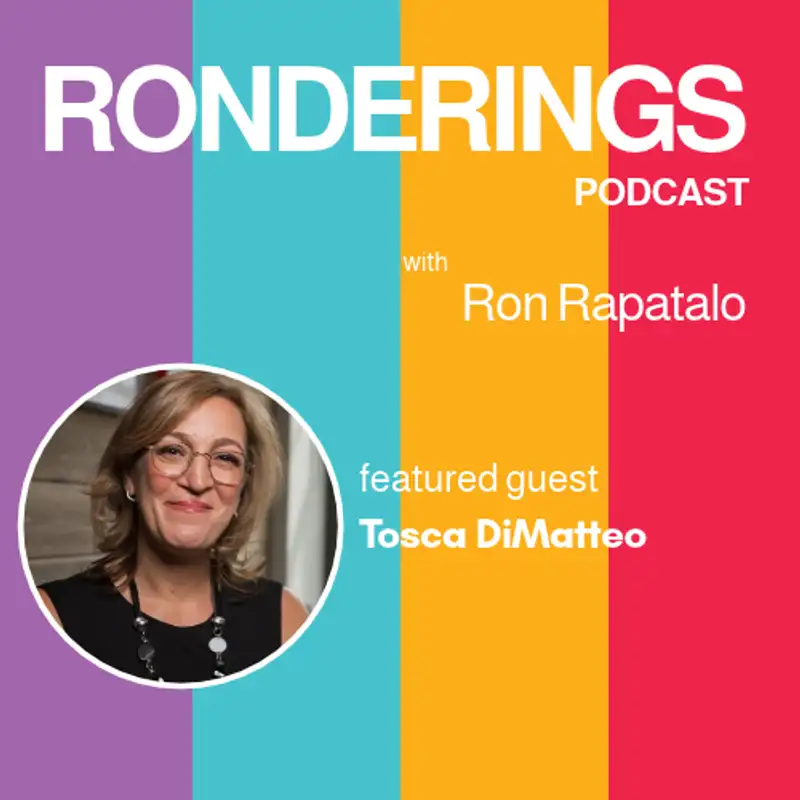
Ron Rapatalo: Okay, this is a fun one. Tosca DiMatteo is a coach, personal branding expert, marketer, storyteller, and host of the Unlock Lab podcast. Our conversation really comes down to one word: transformation. Not the quick, feel-good kind, the kind where you actually start seeing yourself differently. Talk about personal branding, nonlinear careers, finding the thread that connects all the things you've done, generosity, receiving, manifesting, storytelling, stories we tell ourselves about who we're supposed to be.
Ron Rapatalo: And of course we wandered to some pretty interesting places, looking at Jay-Z versus Beyonce as a personal branding strategy. Yeah, we went there. Tosca brings a ton of energy, curiosity, and honesty to this combo. Let's get into it. Tosca DiMatteo is on Ronderings. Ronderings Universe. One of the things that I've done not as much of on my podcast is to have a coach and fellow podcast host on, and I'm really, really lucky, 'cause I'm gonna chop it up on all of those things plus some with Tosca DiMatteo, who I met through previous Ronderings podcast guest Surabhi Lal. Tosca, how are you doing today?
Tosca DiMatteo: I'm good. I'm so excited to be here and talk to you today.
Ron Rapatalo: Same here.
Tosca DiMatteo: So thank you for having me.
Ron Rapatalo: It's always fun to, like, chop it up with people that have very similar kind of like professional things going on, right? Because, you know, if I think about how many people that I know coach and have a podcast, I'm like, if you and I were in the same room, it might take us a little bit, Tosca, to find someone else who does those two things, so.
Tosca DiMatteo: Fair enough. Fair
Ron Rapatalo: enough. Yeah. Might just need to walk into the middle of, like, Times Square, say, like, "Podcast hosts and coaches, come together!" Might be waiting a while. But without further ado, why don't we get into it? What's your story?
Tosca DiMatteo: Well, thank you again for having me here. Um and you know, it's funny because I really did say, "What, what do I want that to be?" It's, it's a beautiful question to just like experiment with, you know? Because, yeah, like as a podcast host or as a coach or as a speaker, right, you get to tell any kind of origin story that you want. And yeah, and like sometimes you get sick of your own story, or sometimes it just doesn't you know- feel good anymore. Yeah Or you wanna tell a different thread, you know? So anyway, I just wanna say thank you for that open-endedness, because I know that, um, it's, it's really beauti- it's a beautiful question.
Ron Rapatalo: Thank you.
Tosca DiMatteo: And to be held, to have space held for that I know is, is just so valuable. Um, so here's what I'll say. Okay. And it's gonna be short. I'm gonna, it's, it's I'm, I'm not giving you like my life story, um, with this short version. Which is okay, but it doesn't mean like we can't go into it, right? Like
Ron Rapatalo: because I will.
Tosca DiMatteo: You will. I know. I'm not worried. Yeah I'm not worried. But I think like one of the easiest ways I can explain like a little bit about like what really lights me up and what I enjoy is like you know those, you know those like lawn videos where the, the lawn is like a mess and then the guy is mowing it, and it's like, right, it's all this like super rapid Um, you get to see it go from like a total mess to like beautiful, and it's like so gratifying. Or like the hair videos, right, where it's like somebody's got, you know, some crazy hair situation going on, and all of a sudden, right, and they look beautiful. And then there's like this slow-mo of when they look at themselves in the mirror, and they're like, "Oh. Oh my gosh, like I love myself. Like, I love this," you know? Or or even like home renovations, right, where like they come back and like-
Ron Rapatalo: Oh, and they get the, the pop of like seeing what the house looks like after it's been fully renovated.
Tosca DiMatteo: Y- yeah, yeah. Yes.
Ron Rapatalo: Like
Tosca DiMatteo: so that type of like transformation- Like, I love watching it, and it's because I love helping people actually feel that way about themselves on the inside. Like, at the 'Cause, you know, I watch those things and I'm like, "Oh, they love their hair," right? And it's great, and it's like, it's so gratifying to see them see themselves in a new light. And I- that gets my goat and I love to do it for, like, people about how they truly feel themsel- about themselves, not just like that one day where their hair is looking fabulous, you know? Yeah. And it's like, right? But, like, if they actually Where something really changes on the inside where they are different, you know? They are, they are in another version of themselves, and not just for a moment or for, like, a month while the thing lasts, but, like, a, a lot longer, you know, w- well into the future.
Tosca DiMatteo: That's, that's my story. That's my jam. That's, that's in a nutshell what, what lights me up.
Ron Rapatalo: Yeah. How did you know y- you wanted to do that? How did you know that that would be the thing I'm sure you knew when it lit you up, but how did you know this is what you wanted to focus your kind of, like, entire being on?
Tosca DiMatteo: You know, actually, um, well I have, I've always been the kind of person that's like, you know, helping other people on their journey. Like, that was, that was me in my youth. But I think that the, the moment that I was like, "I wanna, I wanna be a, a holding space for people. Like, I wanna help them and be a true support for them in a way that they haven't ever experienced" was when I sat in front of my first coach ever. There was something like and I didn't even have that coaching experience, but I think I just sat in front of this woman, and I had never had therapy and I never had, you know. But I just sat in front of this woman and I was like, like, "She is here for me. Like, she's here to support me." Yeah. And man, I would love to do that for other people.
Tosca DiMatteo: I just had that, you know, it was this low-key thing but I felt it in that moment. And I, and when I go back and I'm like, that was a moment where I was like- This is awesome, you know? But of course I never, you know, it wasn't until years later that I was like, "Oh, no, yeah, I really wanna do this," you know?
Ron Rapatalo: Yeah. I had a similar story I wanna shout out. Anna Graham Hunter. I went through her Career Happiness coaching program- 2012, 2013. And like you, right, I'd always been around coaching, advising, mentoring, from freshman orientation leader, peer advisor, resident assistant in college, informal, like, career coach to my friends. And then I worked in talent acquisition, right? So I was talking to job candidates a lot, right? And so I remember when I started focusing on myself, 'cause I think I had never hired a coach before. I was like, I know Anna because we'd worked together, Teach For America. Career Happiness. Didn't ever have the word happiness and career come together.
Ron Rapatalo: It was like, I'm fascinated, right? And it was like, you know, some coaching and then, like, a virtual platform program. And I just remember her style of working with me, and particularly, I think I still have it somewhere in my Google Calendar, Tosca, where she asked me to write a letter to myself a year from after I went through the program. You know when people ask you to do those things of, like, fast-forward to the future and, like, write something to yourself about where you're gonna be. And I, the one, there was a lot about career stuff, but the one thing I do remember, 'cause remember when we were in the, like, our green room conversation, I was mentioning there are babies on the way.
Ron Rapatalo: I was mentioning that my wife and I would be expecting our first. And that's what happened. You know what I'm saying? Wow. Yeah. Like when you, when you put that stuff into like, when you realize, holy shit, I realized like, oh my God, that happened. Whoa. Like something about manifesting, right? Um, and not know exactly how it's gonna happen, um, but it did, was really powerful for me in my coach- in getting coached.
Tosca DiMatteo: Yeah. No, that's so cool. You know and w- when you say that, what it makes me think of is like, you know, 'cause I think manifesting, like s- you know, there are people that are like, "What is that word?" And there's like a whole lot of mumbo jumbo out there, right? About- like what is that real- what is it really and what does it look like and how you do that, and y- and there's a lot of like, you can do it wrong, right? You're not doing it right. There's a, there's a whole industry around right, like manifesting. But what, what I think that people don't really realize is that, that a lot of people don't actually sit and ask themselves, "What is it I really want?"
Tosca DiMatteo: Like truly, truly, and not like that surface level, this is what society or this is what it, it has been conditioned, or this is what I've been saying I want for 15 years. But to really, really sit with oneself and say, "Yeah, like what do I want?" Which is, I think, that exercise that, that you were asked to do, and maybe you already knew, you know? But, but just, but just having the moment and, and the container just to, to be real with yourself, I think is really powerful.
Ron Rapatalo: It's often easier when someone who does not know you well, is my, my take, right? And asks you that question, right? It's what I One of the questions, I don't know who I learned this from, but I use it often in my coaching practice which is if I had a blank sheet of paper, and imagine we're in a Harry Potter movie, so whatever you write or say on this blank sheet of paper happens. What are you doing? How does it feel like? Who are you with? And all these things, right? And they're like, "Well, I've never been asked that before." Right. There's some how- the permission to dream that for me is so powerful. Like, and that's why I think I've s- I start the Ronderings podcast with what's your story because as you mentioned in your preamble before sharing your story, it's this ability to, like, recreate, right? And I always go back to
Ron Rapatalo: still my favorite musical. It used to be Les Mis, but it's been Hamilton for a while. Right? Who lives, who dies, who tells your story. Don't wait until you've passed to have your story told. You can write it as you're living. And that's powerful- I- right?
Tosca DiMatteo: It's super powerful. Yeah. And, you know, I find that people write, often are telling their story from their past versus from the present- and looking forward. And I think that's why it gets hard to feel and position yourself for what you want next, because we're It's like, it's like you're telling your story from when you were a rookie in whatever career, you know? Versus, like, now it's, like, 15 years later or whatever, and now you're pulling a different thread. You know, maybe it was, like, a marketing thread in your career, and now you wanna pull, like, the people thread and how you're all about change and transformation, right? Because what you wanna do next maybe isn't that marketing thread. But, but we're not, um I think people aren't really trained to look at their stories that way.
Tosca DiMatteo: They're trained to look at explain what you did and what the outcome and the result was and, like, versus really taking a step back- and understanding what were your superpowers all along, and now where do you want them to take you?
Ron Rapatalo: Yeah. Yeah. I think a lot of times I think when you're- we're formulating these stories, right, it can almost sound like what's on the website of a bio, a bio for a professional website, right? Which tends to speak a certain way. "Here's where I was educated." Yes. "These are some of the places I worked," and, like- Admittedly, when I, when I kid around with folks, I'm like, "That's not what I want my podcast to be solely," right? There's gonna be snippets of it. Of course I ask questions around it, but it's going that level deeper. It's this blend of, you know, the personal, professional, and I would say the spiritual. However someone defines spiritual. Doesn't have to be religion all the time, right? But I do think people, we often believe in something that's beyond our bodies.
Ron Rapatalo: And what does that mean for you, right? You know? Yeah. And so for me, like, having people combine those things and giving how they've come to that place, 'cause that's my take on, like, manifesting, right? This, this understanding that like I don't have all the answers, and I am trusting. It's almost like my ultimate trust falls to the universe and the spirit of God and all these things, like saying, "I don't know what the fuck I'm doing, but I have an idea of what I want." Yeah. But I'm also open to the journey of how I get there, and being surprised that maybe what I said I wanted in this moment isn't exactly what I need
Tosca DiMatteo: Well, I love that you br- I, I love that you came back to that, because I think what was also really powerful about your story about, right? You manifested that shit, right? Yeah. You had a baby. But also I think, I think really it's about recognizing how powerful we are as individuals. And however, right, however life unfolds, however that baby came to be, right? Like- but that, but that it's not just about, ooh, I speak it into existence. I mean, look, and some people, that's their magic. Some people it's like you just say the thing and you believe it and, and boom. Like, I know people like that. Yeah. Super frustrating. But anyways, but yeah.
Ron Rapatalo: It's like-
Tosca DiMatteo: I love you a lot
Ron Rapatalo: are you an X, are you an X-Men? Are you Charles Xavier? Like
Tosca DiMatteo: Seriously. But, but actually but in all fairness, like people that do, their, their energy operates that way, I believe, like they have other things to overcome in order to, to overcome in order for that to be possible. Yes. It's not like that comes without a journey. Yes. It's, you know, um, but that, but then I think, you know, I think that people underestimate how powerful they are. Um, and, and, and also have bli- can, we can get blinders and like, self included, right? About, okay yeah, I want this thing, and so I think I know how I'm getting there. I'm going from, you know, A to B to C and then at step D, ta-da. And that's also, that's, that's a control thing. You know? That can be a control thing. It can be this like, I'd rather write the story that I think will help me like achieve a thing- versus letting, letting it unfold versus recognizing like we aren't all in control.
Tosca DiMatteo: So what does that mean about the steps that we take if, if we don't really know how to get there?
Ron Rapatalo: Yeah. And I think I've realized with that, I mean, I think for such a long time, if I think about my own K through 16 education, that I was the ultimate sole driver to getting where I am which was never really true, right? I have lots of instances just like you. If we were to do a this is your life from kindergarten to like end of college of like who are all the people that helped you along the way, right? It would be a massive list of people, right? 'Cause I always like to tell people I have the people that are seen and unseen that supported me along my journey, right?
Ron Rapatalo: And I think as I got- older and had snippets of, like, learning to advocate for myself in high school and in college. Lots of really good stories there. Be like, "This is unfair. Why is my financial aid getting audited? My mom doesn't have a lot of money. What " It was stressing me the F out. I got help because I asked someone in the office where I was a student worker, who happened to work financial aid in a different part of NYU, and she totally advocated for me to clean it up. Wow. 'Cause without it- Wow I don't know what kind of aid I was gonna You know, they, they put that over you, like hangs over you, just like, "Do you wanna, like, see how many pairs of underwear?" It felt very, ugh, it was very icky. Um, but one of the things I realized is the whole idea of being able to know that I don't know everything is being able to ask others to lean in, too
Ron Rapatalo: for their wisdom, for their resources. Because one of my favorite phrases that I love to use in my coaching practice and in life is, how do I unlock the natural propensity of generosity in others? Yeah. That's why I talk to people about networking, in fact. I'm just like, people wanna be generous. You have to And that happens in many different ways
Tosca DiMatteo: Yeah, and you, and you have to be open to receive. And like, I think this is one of those lessons in my life that comes back and back. I think I'm being open to receiving. And then it's like, oh, no, I'm, I'm blocking my blessings, you know? and I think we Because I don't know, for me, right, so much like heart protection, like so much self-protection- um, that I learned, you know, since I was a child. And that mechanism goes up and I don't even know it anymore, you know? Or like, just protection from disappointment- um, and all the things. And, and so you think, yeah, I'm, I'm, I'm open to generosity, and let me tell you. Like the amount of times I w- I've like, let's just say I've gotten an email, right? And I'm like- I skim through it, and my brain tells me it says one thing. I go back like three days later, I'm like, "Oh my gosh, wait a minute.
Tosca DiMatteo: There was like this very generous gift in there," and I didn't even like my brain didn't even let me see it, you know? Yeah. It's like it blocks the f- it really does block the flow of of li- I don't know if you've had that same experience or, or like, or if you, if the flood gates are open, you're like, "No, no, no, I give and I receive and it's there." Like, I don't I'm curious if you've had to learn anything in that regard.
Ron Rapatalo: Yeah. I, I'm, I'm sure I've had those moments, right, of, you know, someone 'Cause I, it, it often for me, like my f- it, my, my first thought is it comes from a lack of confidence in that I deserve what I'm about to get. Right? Yeah. And so it's like someone's offering me something. Like, I've had folks say, "Ron, I'm Whatever you need, ask." I'm like, "Do they really mean that? How are the " You know, because sometimes, you know, it's just like do they mean money? Do they mean, what do they mean by that, right? Um, and you get, I think the Tagalog word, being Filipino, like is hiya, feel a little bit of like shame.
Ron Rapatalo: I'm like, I don't want them to say no if I ask them for something I really need, 'cause what if they say no? Like, oh I meant that, except that, you know? And so it's just like I'm not confident that that is something that I can get, because I don't know if I even deserve it sometimes, right? I think there's this like deeper thing that happens, right? But I'll give an example of something recently where I'm like, "Well, I do deserve this," right? So I went through my own coaching recently, um, a couple of weeks ago from a fellow coach through a program I went to. And she was like, "Well, how did the program go? Blah, blah, blah.
Ron Rapatalo: Have you been following up on them?" I was like, "Well, not really. I just, I need a little bit of help." And it, like, you know, kind of It's so funny because I find that those of us in the helping professions are often our own worst enemy. Surprise, surprise, right? Like the advice that I give I don't take for myself. She's like, "Well, Ron, what's your like, in six weeks, what's the big rock you wanna focus on?" It's like, "I want more coaching clients," because this, but this is w- it's a love language. Like those y those like you and I who love coaching, it's like I can If I had all the money in the world, it's one of the few, one of the two things I would do for free.
Ron Rapatalo: That and connecting people. I love it. 'Cause it's being in that kind of service, I'm in my ikigai, and I am living all the dimensions of how I should be, you know, um, getting my purpose. And so she's like, "Well, break that down. What's like the little habit that you would do every day?" Taking what she said was like she, she knows that I don't like writing big goals and plans like that, but like, "Ron, what are the habit systems you're gonna use every day?" So I'll tell you what I did. I said, "I can reach out to five people a day and write one social media post every day." I've been doing it the last two weeks. You know how much content I have? It's sick. It's not even funny, right? I mean, I can come up with content that's easy for me, right? But then reaching out to five people, I'm like, wait a second, I know a crap load of people.
Ron Rapatalo: So I'm like, I have a, I have a, I have a new coaching client who's someone that I've known for a minute. She's like, "I would love to be coached by you, Ron." I have another buddy who I just followed up with. He's like, "Hey, I've got a contract for you, and you were on my list of people to reach out to. Here's how much it'd be." I'm like, "Great, send me the contract." People will say It's just, I have another friend who I gave informal advice to, connected me to three people. I'm on the phone with two of them in the next two weeks, and it's amazing to see. If you don't ask- You don't get. You can't, I, I just it's one of the things, you know, when they say closed mouths don't get fed, I think, I, I almost think about that literally because I tell people I like to eat, Tosca. We could turn this into, like, a food podcast because one of my fa-
Tosca DiMatteo: Oh, 'cause trust, we could go there. We could go there.
Ron Rapatalo: I, like, I've been watching Facebook Reels of late of this one person. He's like, "Here are the best burgers you can get in New York City." I'm like, oh, my God. "Here are the best pizzas and bagels" I'm like, oh, my God, I'm so hungry. Why do you eat? Why are you showing me this? I'm like, oh, my God.
Tosca DiMatteo: Please, my whole birthday, like, my, one of my birthday celebrations is gonna be, like, a food tour on, like, Arthur Avenue. So I'm just saying, like, I'm with you. I'm with my God. Yeah, I'd totally do that.
Ron Rapatalo: That makes me, ugh. Um. And especially, like, being Shout out to living in the New York City metro area. Like, we ha when people say, "We have the best food city in America," I'm like, no, you don't. Unless you said it was New York, you're lying. You're lying. And yes, I am talking about my friends in LA particularly love to give me ish about saying, "We have better food than New York." I'm like, "No, you don't." Maybe you have Mexican food. Yes, you have Mexican food. Let's be clear. Mexican food's better out there.
Tosca DiMatteo: Right. There might be some- some cuisines where you might edge out a little bit, but yeah, no, New York, you d- nothing like it. But, you know, I do, you know, I do wanna s- say something about what you're saying because I I think especially, um, you know, about asking for what you need or what you want and I think a, a lot of people have a hard time. And I think it's getting harder honestly because there's so much transactional shit going on. Ooh. Like, I don't know about you, but, like, for me, it's like I, I am, I am, like, generosity is definitely one of my, like, big values, and I'm, I'm- very generous. And but I g- I have gotten jaded, not, not just because there's, like, this transactional, like, world that's been so ever present and, and bigger, you know, because of technology and it's just so easy, like, um.
Tosca DiMatteo: But I think also- For me at least, right? After seeing, like, s- even some betrayals of, like, uh, in my generosity over the course of years- then I found myself really holding back from that because I'm like, "Well, I don't, I don't wanna get burned." Like, I don't wanna just be g- you know, I'm never tit for tat, but I think that, I think that people can go through those phases where you get away from yourself because of life, you know? Because, because we're always keeping an eye on, like, how are things working and, and, you know, is this real? Is this authentic? It's just so, it's so I don't know. I, I don't know. I just think, I think it's, it was worth just saying, like, 'cause you brought that up. I think I think it's really hard right now, especially because we're s- we're, we're inundated with so much of, of the nastiness.
Tosca DiMatteo: But to remember that, that generosity is, is natural and it is, it is the, it is the flow of life, but sometimes we stop it, I think, without realizing it.
Ron Rapatalo: Yeah. One of the podcasts I've recently recorded, yesterday, in fact at the time of this recording right, um, was talking about, you know, love versus fear, right? And I think it is always easier said than done, and we were talking about leadership, right? It's like, you know leading with leading through fear, leading through love, right? And I think this day and age, right, it is less popular to say that the way that you're leading inside of an organization comes from a place of love. I mean, not the way you love your family. That's different, right? I, when I've I heard this argument from, like some big tech CEOs, like, you can't love in an organization like you would, like, in a family because your family is your f- they stay your family forever. But in an organization, right, there is a transactional relationship at the end.
Ron Rapatalo: I'm paying you for this thing, and if somehow something is going on with this organization, the priority is to keep the organization afloat, I may need to sever said relationship. Right. Is that love? Maybe not, right? Not the same way, right? You know, because if you're loving someone in the classic way, I think of it as like, well, I'm gonna hold on to you because that's my But my priority's to the organization, not to the individual, right? And so I think it's really interesting with what, to, to take what you're saying and, and, and, and, and, and kind of thread through it a little bit is I'm finding the feeling of folks having to do less with more, and feeling that there's less out there accentuates the transactionality that's happening in our space.
Ron Rapatalo: Right? And so it's easy, like I'm gonna get from you and then Or I promise you something, I can't give it to you, and I'm just gonna ghost you. 'Cause I've had that happen a num- a number of times for me to remember, right? Where it just, it makes me sad. I was, like, literally thinking of examples of things of them, like thinking through, like, my LinkedIn history and, like, people I've interacted with. I'm like, I've been ghosted by some people who said we were gonna, we were gonna do some stuff together, and like, I literally followed up like five, seven, nine, 10 times, text, email, bat signal. And like, they just disappeared on me, which then, right, my mind thinks for every time that that's happened, most people have been of their word. And the small samples where people have done that, it's usually been stuff going on with them.
Tosca DiMatteo: Right. It ain't about you. I say that sh- I say it all the time. It, it really
Ron Rapatalo: is. I, 'cause if you
Tosca DiMatteo: think that- Nobody's thinking about you as much as you're thinking about you, right? Like '
Ron Rapatalo: Cause if I took all that stuff per I think about, like, it's funny. Yeah. Um, I, there's this one book, um, that I had, um, right after college that I got. It was, um, forgetting the author's name, but it ended up, um, being made into a TV show. Caleb Carr's book. Oh my God, what the heck is the name of the book? But he's an NYU alum, and and I went to one of my first NYU alum, um, events, and he was giving out copies of the book and signing it. I then lent it to a dear friend of mine who didn't give it back to me for 20 years, and I'd literally forgotten about it. All of a sudden, I get a message from said friend and said, "Can I get your address? I don't know if you remember, but I have your book." I'm like, "Oh, shit." Oh my
Tosca DiMatteo: gosh.
Ron Rapatalo: It's like out of the blue. Yeah. Totally out of sight, out of mind.
Tosca DiMatteo: Yeah, yeah, yeah.
Ron Rapatalo: And it's just funny. Oh, yeah. Like, it's one of those things where it's just like I remembered it probably from '97 to 2001, but after that I was just like, "I don't know. Book's gone. I don't need no " Whatever, right? I, but all- It's so funny how sometimes these things happen. Like, sometimes these thi- and then, like sometimes decades later it's just like, oh, I- And that seemingly small thing, I'm like it meant something to me. Like, oh, wow, you remembered, and like it and it was a really nice gesture that I did not think would ever have happened because I had really lost touch with the person.
Tosca DiMatteo: Yeah, it's just funny how things come back around and- and I think I always get amazed at like, you know, sometimes I hear from people, I haven't seen them in decades, and then they're just But they, they remember, you know, they remember the, the energy that I brought, you know? Yeah. Or they just remember how, you know, how being around me ma- made them feel. Yeah. And it's like, I think we don't know the impact that we, we have on people. You know? 'Cause you don't, you're not necessarily getting feedback every You know, you're not getting constant feedback about that. But, you know, and I think it goes back to this, actually what you were saying about like love versus fear, and, and you can s- you can still be in a transactional situation.
Tosca DiMatteo: Yes. And you can still have, right, you have to have certain loyalties, but you can still operate from a place of love, I think. You can still operate from this, right, from having the empathy from, from operating of like, like this I think actually it, it looks bad, but actually I think it is gonna be in your best interest and you may not see it right now, but this is the I'm telling you the truth. You may not wanna hear it right now, but you know. Like, but I think there's ways, especially, you know, in leadership where, where we can just be more honest with people and come from a place of- I'm, like this is actually the company best interest, but actually if it's the company best interest, that must mean it's also your best interest, even if we can't see right now how that's gonna pan out.
Tosca DiMatteo: You know? And 'cause I co- I coach so many people, and this, this, you know, this is, I- I think applies broadly, but I think, you know, the, it makes me think of like people who are let go, right? And then they're just m- they're mortified. And of course 'cause identities are all wrapped up in our careers, blah, blah, blah. But, but like swear to God, like 100% of the time it was a blessing in disguise because it just wasn't a fit anymore, right? But like, but however that was handled, it could be handled, you know, by an organization or by a leader or whatever in a way that honors the individual and it, and you know, and isn't just transactional, "Okay, and this'll be your last day." And like it You know what I mean? 'Cause I think that's, that's where we lose the humanity. Even in transacting, we can still bring humanity to that, and I think that's where like there's a miss.
Ron Rapatalo: Yeah. I think what happens is that, you know, this goes back to something I've been thinking about for some time, right? Is that organizations are built to protect themselves, right? And so when you start to get lawyers involved, especially, and when there are layoffs- The protection mechanism, which is, I think fights up against the human aspect of how you let someone go, right? 'Cause I, I, being in the talent space for 20-plus years, I've heard the gamut. I've heard of folks right. Sure like, who were traveling for their organization and found out that they were laid off. Right. Literally, they were in the middle of a client engagement. "Oh, wait. Am I gonna be able to get back home? Are my cards gonna w-," oh, what the You know what I'm s- It's just it's crazy
Ron Rapatalo: like, how did y'all not think about that stuff? But it then becomes, "Well, if we have to think about that, delay," then it just, people go, "Well, for a handful of people, shit happens. We're gonna figure it out." But for the most part, you know, we have to protect the org, which means there's this order of operations of when we turn off your access, when we do this, how you're communicated with, all these things, which then leads to, I think, the feeling of it feeling cold.
Ron Rapatalo: Because if you're thinking about protection versus, "Well, let's be empathetic with it and mix in protection," protection is the first order in the layoff of the organization. We don't wanna lose our intellectual property. We don't wanna be sued. We don't It just So when you understand it from that dynamic, I'm then not surprised that most layoffs have the feeling that you and I've experienced from folks who've reached out to us after being laid off of, like, often folks are numb, they're angry, all these things, right?
Ron Rapatalo: And it's because organizations are not set up to believe that the humanistic aspect, with very few exceptions in my experience, right? I've, I saw one organization where the, the president of the organization said, "We had to go through really tough layoffs," right? Blah, blah, blah, blah, blah. "Here are all these people that I just wanna put out there that would be amazing to land somewhere else." I probably have seen that once. That's the only example I can, you know, of like saying-
Tosca DiMatteo: Yeah, it's
Ron Rapatalo: crazy 'cause it, it's not because once again, it's the protection mechanism. Right? Of, well, if we do this, well, we gotta ask permission, but why don't you ask? Well, you know, if we do, do I just like, oh my God, like, like it then becomes- You're protecting the org, right? And the work that you and I do with coaching people, right, especially going through their careers is, you know, we're focused on the individual, which I think is a tension in terms of, like, how these things get set up. Um, well, Tosca, I wanna shift gears. Yeah, yeah. And I wanna ask you about your podcast. Oh. About the Unlock Lab podcast. So tell me a little bit about its origin and what you've learned from it. Um- Thank you, um- 'cause I always like to pick people's brains who also have their own podcast.
Tosca DiMatteo: Okay. So yeah, so actually the origin Okay, a, a little bit starts with, like, during the pandemic, I launched on, like, Instagram platform, Talk About It Tuesday. And and it was just, I interviewed people. I think I did, like, it was almost, like, 80 episodes of it was just pure interviewing other people, holding a lot of space for their story, and um, you know, and, and really stories about, like, overcoming and like, you know, going through the mud and coming out the other side.
Tosca DiMatteo: It was a lot of those, like, it stories that were inspiring to help people, you know, um, know it can get better, you know? And, and then, but that was a lot of energy going out, right? That was a l- that was a lot of generosity, right? Like, that was, like um, and, and I got to a point where I was like, "Wait a minute," like, "How is this actually, how is this actually helping me move the needle forward on my, my work or my business or whatever?" And so I took, uh, I s- I kind of stopped, and then this idea of, like, I wanted to do more speaking, right? And, you know, you can't just, like, step up on a stage anytime you wanna, like, you know, share your wisdom with the world, right? So- then it was like, well, how can I keep the speaking alive, and how can I continue to develop, um, by creating my own table?
Tosca DiMatteo: And so the Unlock Lab, let me tell you, the name of the Unlock Lab actually came from because I was experimenting with, like, having in-person, like, circles where people could- you know, share their stories and f- and find, you know, find some ahas and breakthroughs in their life, like, in person. And then when it came time to where I was, like, toying around with a, a podcast idea, um, I ended up using the Unlock Lab name because it just made sense. But I will say that, like, I felt overwhelmed by, by starting a podcast. I was like, oh, my gosh, like, a whole nother thing, and I'm not an editor, and, like, I don't Like, I don't wanna add that to the list of, like, content stuff, you know? And I was, I was, um, in a, a Zoom call with two of my friends, and we were, like, kind of, like, entrepreneur, you know, like, kind of
Tosca DiMatteo: I don't even wanna say mastermind 'cause, like, what is a fricking mastermind anyway? But, like- um, but, but we all just kinda basically encouraged each other and helped us through whatever, whatever obstacles we, we were kinda going with at the time. And, and, you know, and somebody said to me, like, "Well, if you didn't have to do anything at all, you know, would you-" If somebody just put a microphone in your face, would, would you do a podcast? I was like, "Hell yeah." Like, yeah, get on my soapbox and, like, say whatever the heck about the topics that I care about, sure. And that was a really clear indication to me. It was like, oh, no, I wanna do this. I just, I'm feeling overwhelmed. I, you know, it, it feels daunting. And then they helped me see it, it didn't have to be as daunting as I was making it out to be in my head.
Tosca DiMatteo: Yeah. And, and because of that support be- they helped me get out of my own way, I ended up launching the Unlock Lab, you know, back in, it was, like, November of 2023.
Ron Rapatalo: Yeah. Um, what have you learned from doing that podcast? Are there any particular memorable moments from episodes or just from the attention you've gotten from Unlock Lab that you'd wanna highlight for us?
Tosca DiMatteo: I, look, it's a f- the Unlock Lab is a combination of I do interviews, but I also do a lot of solo, um episodes. Um, hence, right, 'cause I did the Talk About It Tuesday. I was like, wait, but, like, I wasn't creating space for my own right, wisdom to share. Um, so, so I think one of the big learnings was, like, yeah, like, um, for me Uh, really learning about what is it that I wanna talk about and, and how do I do it in a way that's natural and authentic to me, right? Because you can script something all to hell, you know? Um, so the, I think a big learning is just really discovering the process that works for me that where I can do my best work to show up, whether it's my solo el- you know, episodes or not
Tosca DiMatteo: um, where I can really feel the fire. 'Cause I feel like when I feel the fire of what I'm talking about, like it lands different in people's hearts, and that's what I want. Yeah. You know? So I'm, I, I continue to tweak it, you know? Yeah. I continue to learn what's g- w- how does this format work, um, with my energy and my style.
Ron Rapatalo: Yeah. I'm curious, so when you do a solo episode, how are you, how, how did you first start constructing it? Where is it now when you do a solo episode? I'm, I'm cur picking your brain intentionally. It's something-
Tosca DiMatteo: Yeah, yeah
Ron Rapatalo: I've thought about, but I get such energy when I'm interviewing a guest, like the, I love, I love the back
Tosca DiMatteo: and forth. It's so much easier, Ron. Oh, it really is. It's so much easier when you have stimuli, right? And you're getting energy back.
Ron Rapatalo: A
Tosca DiMatteo: thousand.
Ron Rapatalo: Right? Thousand.
Tosca DiMatteo: Right? And when you're doing solo, it is, you're all, it's just giving. And, and I find it to be much more draining. Like, I'm gonna get off of this with you, and I'm gonna be like, "Oh my God, I'm so," like, I'm gonna be super energized. But when I get off of my solo episodes it can be draining. So what I will say is like I think at first I was really, you know, really trying to script things out and like where do I want it to go, and like what are the points that I wanna make? And then I think I evolved into, yeah, what are those key points, and what are the stories that I wanna tell with those key points? Um, and then I also gave myself permission to if something came up and then I all of a sudden started telling another story, I would just let myself go with it, you know? And now I think it's, um, even l- I'm trying to do it even lighter.
Tosca DiMatteo: S- uh, lift on that, where it's like what is, you know, what are the, yeah, what are the things that I wanna say, and maybe I don't even identify the stories, although that's a little bit scary. Um Um, I think I'm, I, I think I'm bet- I'm best when I have a little bit of a, of a, the bullet points of those main points and those main stories. Um, but then I also give myself permission if, if some other message comes up that I feel like sharing in the moment, I give myself permission to do that too. So- that's, I don't know if that's helpful, but that's kinda what the process has been. I'm the solo episode beast.
Ron Rapatalo: Yeah. No, that's super helpful 'cause I've, I've gone back and forth in my own head, right? 'Cause I have a similar story to you. When I started the Ronderings Podcast, I had been a frequent podcast guest. I was on a lot of episodes because I don't have a problem getting on the mic. That's easy, just like it is for you Right It was all the technical stuff. I've gotta like, wait, I gotta sound engineer this and do that? I don't wanna do the production, just give me the mic. And thank God, shout out to my, um, the folks at podcastsmatter.com for supporting me to produce the episode. 'Cause all I do is show up and get the guests. Getting the guests is easy.
Ron Rapatalo: Interviewing people, easy. This is 20 years of interviewing people for a living, for jobs. Right. I mean, interviewing is like, I just It's getting attuned listening, right? But not having it be an interview for- like, a job interview format. It's just going where the conversation goes, right? And g- and feeling it out. Which for me is a lot of fun because for the, uh, the quote-unquote improv unscripted element of it, for me, adds to the element of surprise. Admittedly, for me I, the element of surprise, it allows me to bring the energy. If it's too, and I know where it's going, it's a slight bit less interesting for me. Slight. Even though, much like you I'm sure in Unlock Lab, right? I don't know if you give, when you have guest episodes, scripted questions to folks, right? I'd, I've had a- enough podcast guests who need that scaffolding for a host of different reasons.
Ron Rapatalo: Right? And this is speaking of inclusion, right? Because some guests, they need that because it's harder for them to articulate things for whatever different reason, right? Right. And they need the bullet points. They need to Like, I'm like, that's cool, right? Because I'm not one to demand the like, "Hey, if you're not gonna improv with me by like thinking off the dome on the spot, you can't be on " 'Cause that feels stupid, right? But it makes me realize, oh, wait a second, people have many different styles of preparation in coming to the forefront to show up as their best self. Which at the end of it all is just what I want when I'm interviewing people like you, right? It's just like, come as your best self, however way you need to prepare and show up, I'm down with.
Tosca DiMatteo: And it's funny, when you were saying that, you know, because when I do my guest- episodes. Um, I do a pre-call, and we kind of start to articulate what is that, that arena um, that we wanna, that we wanna go deep on. Because for me, I think it's helpful to know, like, what is, what is their expertise? Like, what is that that I really want people to know? And so that, that conversation helps me kind of- have, have a set of questions that, that I can go to that remind me of like, "Oh, right, this was the thing that I was excited for people to hear about," or whatever. Yeah. But always on, always in the actual interview, it's, it, it goes with the flow of the conversation.
Tosca DiMatteo: Yeah. And so sometimes I hit three of the 10 questions I maybe came up with. Sometimes we, we end up going through all, all of them. It just, it just depends. So for me having the scaffolding, um, helps to, to focus the conversation, but um, yeah, I don't know. But it's funny, but, like, uh, it's like, uh But having, but having the space in between, I think is, um, is, yeah, like, where the magic comes sometimes 'cause you're just in the moment. 'Cause then you're really, like it's about being present and in the moment, not like not like, "Oh, I have this place that I wanna go to." And so that's like the, the line that I walk, which is like- I wanna be present in the conversation and, "Oh, shit, I wanna make sure we talk about this," right? So h- you know, it's like that letting go and also coming back to, you know, taking the wheel a little bit. Yeah. So it just depends.
Ron Rapatalo: I'm gonna shift gears again. I'd be remiss to not ask you about, you know, the 25-plus years of marketing experience that you have. And so I'm gonna ask the usual question of how did you decide to get into mar- when did you know you wanted to pursue that part of your professional career? Was that something you knew younger? Was it through college? Was it just happenstance? I'm curious to learn.
Tosca DiMatteo: Yeah. You know, it's, it's, uh So I went to RIT undergrad at Rochester Institute of Technology. And I went for business. And, um, I took- One of like, you know, intro marketing classes from this gentleman who was like so passionate about- marketing. And he, and, and like he told the story about how, you know, in his, you know, early days, he, he ended up getting like, you know, um, some mustard billboard in, on some like, uh- uh, baseball field and like th- there was a picture, and that ended up like in the front page or whatever. And he just was like so excited about, you know all this stuff. And so I think I really started to get an appreciation for marketing there. Yeah. But also part of where I got my passion for that was I, my first job was at Wegmans Food Markets in Rochester. Oh, look at that. Ah. I worked there for nine years.
Ron Rapatalo: Wow.
Tosca DiMatteo: And so I was always looking at what was on shelf. I was always like, "Oh, what's new?" And like the new packaging, and I was always just really intrigued about that. And so it was a combination of like, you know, me being in the grocery store, you know? 24 hours a week while I was like in school, and then learning about the marketing strategic side. Yeah. And I was like, I wanna do CPG marketing and, and, uh, that's, it was, yeah, just a combination of those things that got me excited.
Ron Rapatalo: And how is that experience? 'Cause I know you also do personal branding coaching, right? Which for me having that kind of marketing background, it must come in extremely handy to help people develop their personal brand. So talk to me about some of the, the similarities and the differences between what you learned in 25 years, like corporate marketing versus personal branding.
Tosca DiMatteo: Yeah, like I think marketing, you know, in the corporate world, right? You have, you have processes, you have structure, you have strategy, you understand like you're, you're learning, oh, I'm trying to get the consumer from A to B. I want them to shift their perception from, you know, C to D. And, and you have all these tools, um, and right? And being really articulate in your messaging, and you have like let's say just say you're doing a billboard ad and like you have, you know, you have five words. What are you Like, what's most important, right? Like what's most important? So you have all this structure, and then I think on the personal branding side, like for me, it's really about the deepest layer foundation of like right, who a person is and what what lights them up. And so I really lean so much more on helping people see the truth of who they are.
Tosca DiMatteo: You know? It's, it, for me, for the personal branding that I do with people, it's less about, "Go post on LinkedIn," you know, and, "Go do this," and like, you know? It's more about do you really understand who you are and what you're bringing to the table, and what you really want to do with your superpowers? That's the, that's the deeper layer. And of course Um, moving into messaging, we can always do that, but I find, like, my clients, usually where we're doing their personal branding is in deeply understanding themselves, and they- and it's so much easier for them to find the language. Yeah. 'Cause once they see
Tosca DiMatteo: the thread, it's also about that. It's about, you know, I sometimes I get clients where they're like, "I did this and, but I also love doing that, and then I did that for a while," and so they feel like they have no story, because they're looking at their experience so desperately. I think you probably, you probably see this too, right? Yeah. And then they're like, "I don't know." And then it's about helping them. There's always an umbrella. There's always a thread that binds it all together, and it's, I think it's about helping people own that journey so that they can really love their brand and love their journey and talk about it in an empowered way. That's, that's where the, you know, the coaching meets the marketing which is, like, really deeply understanding what's going on.
Ron Rapatalo: You know, it's fas- I'm sure you've gotten this feedback before, Tosca, from not only prospective clients who wanna work on personal branding, but I'm sure even when you're coaching them, is this idea that branding at times can feel inauthentic to people, right? "That's not who I am." "The brand's not me." I'm like, "Be clear. The brand is not all you." It is, I like to say it's an approximation of you. If something is fully you, do you want all your stuff out there? If you do, that's, well, that's your brand. I find that is generally not the case for the vast majority of people, right? And so I'm curious, you know, how you help people through those objections of that process of what personal branding is and isn't vis-a-vis this idea of authenticity to self.
Tosca DiMatteo: Yeah. Ooh, that's, that's a big question. Um-
Ron Rapatalo: You like how I ask these questions towards the end of our time, right?
Tosca DiMatteo: I think, I think a big part of it is actually, uh, you know, yeah, like g- getting at well how, how, how are you defining this, you know? Yeah. Because what happens is people have the resistance because they have some certain connotation about what, um, marketing is or what a brand is and what it's supposed to do. You also have people that, that I think come in with this perception that, like, it's, it's static, and you j- you figure it out, and then you're done. And it's like, no. No, right? It, it's constantly evolving. And I think the other way that I, I help, uh, clients understand, um, authenticity is that it's not just about you. It's also about the context. It's also about the audience that you're trying to reach. And so it becomes dynamic, right? Where those two things have to come together.
Tosca DiMatteo: Um, and then I think that, I, I don't know if I'm answering your question, you know, but, uh, I think it's about helping people understand that, like, there's, there's things you can dial up and things you can dial down- and you're still, and you're still you. Yes. But if we're not dialing things up and down, if we're not really cognizant of where our audience is and what they're thinking and w- how they're coming to the table, then, then we're not doing our job in positioning ourself well because it's a, it's a co-creation. Our brand really is a co-creation with the environment, with the, with the other person. Um-
Ron Rapatalo: Yeah. Yeah. No, that makes a ton of sense. I think the idea of giving the client options about what they decide to, like, showcase or not showcase, right? I like to when I give, um, the, my anecdote on personal branding, I give folks the difference between Jay-Z and Beyonce. I give the pop culture example. That's often what I lean is, like, pop culture and sports. Pop culture and sports, pop culture and sports. As I say, if you look at Jay-Z, he'll say So I'm gonna do a very bad Jay-Z impression. Like, "Well, you can listen to my albums, know a lot about me through my albums, right?"
Ron Rapatalo: You know? And so he literally, that's a kind of, not a verbatim quote, but relatively similar. He's put a lot a- out there about himself. But to be clear, I think that resonates with someone like me, but I'm like, but that's not everything about me. Just because I've written a lot, I have this pod and all these things, like, people, I think the, the push and pull of my own personal and professional brand is that people feel like they really know me well, even if they've never met me. Which I find fascinating, right? It is- Part of the hook. But yet when people meet me, I think what often happens is that sometimes it's like, "Oh my God," and blah blah blah. I feel like, I'm like, "Wait, well yeah, but I'm sharing with you what I want you to know that's different than what I don't want you to know," which is admittedly a lot, right?
Ron Rapatalo: And yet someone like Beyonce, like when she posts and the way she curates, I mean, yes, she's gotten a lot more personal over the years, but I would say in contrast to Jay-Z, I feel like people know less about her- in comparison to her, to her spouse, right? And so then becomes like, oh, wait, I was like, you have to choose if it's you wanna be like Jay-Z, Beyonce, somewhere in between in terms of your personal brand because both are effective. That's the end of it, right? The outcome, they're both quite effective in terms of their branding right?
Tosca DiMatteo: Right, right.
Ron Rapatalo: Yeah. And it's just a matter of what you want to showcase about yourself. Branding does not mean that you're just sharing everything about you, right? I almost, I, I think the take what you were saying about what you wanna, um, showcase or not showcase is this idea of, you know, how vulnerable you wanna be with certain things. Yeah. Your brand does not require to be vulnerable about all things. Right. You can have privacy. That is your right. You do not have to be and- talking about everything even with the way that sometimes branding these days people are a bit more vulnerable, right? LinkedIn people like, and I think this is a generational thing, people I would say in our generation, Tosca, I've seen a lot of like, "I don't talk about these things on LinkedIn." I'm like-
Ron Rapatalo: That's your prerogative. Yeah. I admit. But it's funny, like when I read that I'm just like it's usually my friends who are like above 45 who say that.
Tosca DiMatteo: Yeah, it is funny and I think it's funny that it's like announced, right? Yes. I don't usually do this thing, but it's just like, why are you ann- like, whatever. It's so funny. But I think that too, like- I think that, um, w- you know, we've been conditioned- um, right, to compartmentalize.
Ron Rapatalo: Oh, yeah, you hit the nail on the head. Thank you. Yes.
Tosca DiMatteo: You know? Go for it. And so what happens is people leave a lot on the table about what, what their brand really is, because they haven't allowed different parts to come through and express and, you know, and I think that, um, w- I think that we think we're supposed to play by certain rules, and I always say, like, we are multifaceted, dynamic people.
Ron Rapatalo: 1000%.
Tosca DiMatteo: And, but, but, but we've been indoctrinated to stay in a lane and be, and n- and know that lane, and I think that that can really put people off a lot because then they're like "Well, what do I do with all this other stuff, all these other bits of me?" And now in the age of, um, AI, in the age of transaction, in the age of like, what's real, what's not, it is the authenticity, I think, that people are yearning for. 'Cause you know, you, you can feel it from a person when they're just, you know, giving you a line versus like, you know what I mean? Even the written word. Of course. And I think that's what people are yearning for, and, and w- and we, and people need to give themselves permission to let more of themselves, I think, through, because they've been so conditioned to, you know, don't open that door, you know?
Ron Rapatalo: Yeah. Well, Tosca, we are at our time where I'm gonna ask you- the question that, uh, titles the podcast, which is, what is your Rondering? What's the lesson or value you wanna share with the audience?
Tosca DiMatteo: You know, it, it kind of goes back to, you know, how I started my story about transformation. And I think what I want people to know is that no matter your disappointments no matter your heartbreak, no matter your frustration- that you have the power to shift. You have the power to shift what's possible for yourself to, to be your own best friend, and, and I think that when we can become our own best friend, we literally change the world. I- It, it's that simple.
Ron Rapatalo: I love that, the power of, like, growth, right? When you believe that about yourself and that y- we, we, we've never been static, right? And being static is a choice too, right? I, I, I I'm one of those people like, you don't always have to Like, I think we certainly have a super results-oriented society here in America where it's like you always have to be doing and doing and doing. Like, you know, sometimes, like this, this weekend, you know, we didn't go to church this morning. Like, I slept in till like 10:30. It felt beautiful. I was like, "Oh my God, this is wonderful to, like, sleep and not feel like " You know? And just we did stuff around the house.
Ron Rapatalo: It's a little raining. I'm like, "Eh," you know? Like, "We have Monday." Like, I, I just think, like, we, we've been told to always produce, produce, produce, produce that at times it's good to do the exact opposite and not do a thing, and that's a choice too.
Tosca DiMatteo: And, and yeah, and I think that the not doing is what helps you to actually look at yourself because all change starts with self, right? Yeah. Like, I'm not saying anything freaking new, right? No, no. But, but if we're so afraid of stillness, then it becomes hard to, to, to experience that transformation because transformation doesn't happen in the doing. It happens actually in the slowing down and paying attention to who you're being to yourself and to others.
Ron Rapatalo: I've seen that where people struggle to meditate that idea of stillness. Not saying that meditation's the only way for stillness to happen, 'cause stillness can happen a lot of You can have stillness of mind while you're walking, right, and doing physical activity. For sure. But I think when I've seen anecdotally folks, "I really struggle to meditate," I was like, "Why is that?" "'Cause I'm always thinking, and I have to stay still." I'm like, "Pause. That's not Like, meditation does not mean that you're not think- That's impossible." Right. Now, there are some meditation practices I have where, like, my mind literally But this is, like, nine years and going. Like, I meditate almost daily, right? Where I'm just like-
Ron Rapatalo: But thoughts come into everybody's head. That's what And you will t- attach to thoughts while you're medi- it happens. There's not full stillness in life. And so I just tell people, like- 100% well, it's just what you decide to then do with that. If you stick to it, it's not, it's not Don't, don't judge. You can let it go with a breath and then get back to stillness. Stillness is a choice, just like-
Tosca DiMatteo: There it is
Ron Rapatalo: inertia's a choice, right?
Tosca DiMatteo: Yeah, and like anything, right? It's, it's, it's called a practice for a reason. Like it's, it's not something that, you know, comes naturally for a lot of people. Absolutely.
Ron Rapatalo: Um,
Tosca DiMatteo: yeah.
Ron Rapatalo: Yeah. Well, Tosca, how do people find you? What would you like to promote?
Tosca DiMatteo: You know, people can You can visit coachtosca.com, coach T-O-S-C-A.com. You know, I have my contact information there. I have, uh, you can see my podcast. You can-
Ron Rapatalo: Beautiful
Tosca DiMatteo: you can see that page there. And, uh, yeah, that's probably the best place to start.
Ron Rapatalo: Awesome. Well, Tosca, uh, I wanna thank Surabhi for connecting us when I was asking for referrals for Rondrings. I've just really enjoyed this convo and learned so much from you, and just see from the energy you're presenting and the wisdom you shared why you're such an amazing coach. So thank you.
Tosca DiMatteo: Aw. Thank you, Ron. It's, it's beautiful to have these deeper conversations uh, with you. I, I appreciate it. It's been really, it's been a great time. Thank you so much.
Ron Rapatalo: You're welcome. And in the words of one of my favorite sports heroes, Prime Time Deion Sanders, we always come hot with guests like Tosca DiMatteo. Peace. Tosca DiMatteo's Rondering is a pretty powerful one. No matter your disappointments, heartbreak, or frustration, you have the power to shift. That idea of transformation came up throughout the entire conversation. Sometimes the transformation comes from doing something different. Sometimes it comes from slowing down long enough to actually notice who you're being. We talked about personal branding, but really this conversation is about something bigger, knowing yourself, understanding your story, figuring out what you want, and giving yourself permission to change. Tosca, thank you for Rondering with me. Thank you, Surabhi Lal, for making this connection happen. We'll see you on the next Ronderings. Peace.
Ron Rapatalo: Thanks for listening to today's Rondering. I enjoyed hanging out with me and my guest, and I hope you leave with something worth chewing on. If it made you smile, think, or even roll your eyes in a good way, pass it along to someone else. I'm Ron Rapatalo, and until next time, keep Rondering, keep laughing, and keep becoming podcaststhatmatter.org.

Listen to Ronderings using one of many popular podcasting apps or directories.